
A test certificate is the only objective evidence you get that the transformer on your plinth is the transformer you paid for. It is worth being able to read one properly.
Which standard applies
- IS 1180 — outdoor oil-immersed distribution transformers up to 2500 kVA, 33 kV. BIS certification is mandatory for these.
- IS 2026 — power transformers, the Indian adoption of IEC 60076.
- IEC 60076 — the international power transformer standard.
- IS 11171 — dry type power transformers.
The routine tests, and what each proves
Winding resistance
Measured on every tap. Proves the joints are sound and the conductor section is what was designed. An unexpectedly high reading means a bad joint — which will become a hot spot.
Voltage ratio, polarity and vector group
Proves the turns ratio on every tap and that the transformer will parallel correctly. Get the vector group wrong and two transformers intended to run in parallel will fight each other.
No-load loss and no-load current
The core loss you pay for every hour for twenty-five years. Compare against the guaranteed figure in your purchase order, and check the tolerance claimed.
Load loss and impedance voltage
Load loss is the copper loss at full load. Impedance matters for fault level and for parallel operation — two transformers with materially different impedance will not share load proportionally.
Applied and induced overvoltage withstand
Applied voltage tests insulation between windings and earth. Induced voltage tests insulation between turns. Together they prove the transformer will survive the switching and lightning surges the network will throw at it.
Insulation resistance and oil BDV
IR confirms the insulation is dry and clean. Oil breakdown voltage confirms the oil is fit to be the primary insulant — moisture is the enemy, and BDV is how you detect it.
How to read the certificate
- Check the serial number matches the rating plate on the unit that arrived.
- Compare measured losses against the guaranteed values in your order, not against the standard's limits.
- Confirm every tap was tested, not just the principal tap.
- Look at the test date. A certificate dated well before despatch may belong to a different unit.
- Confirm who witnessed it. An unwitnessed certificate is a manufacturer's own word.
The single most useful thing a buyer can do is ask to witness the tests. It costs a day and it changes the conversation.
Our practice
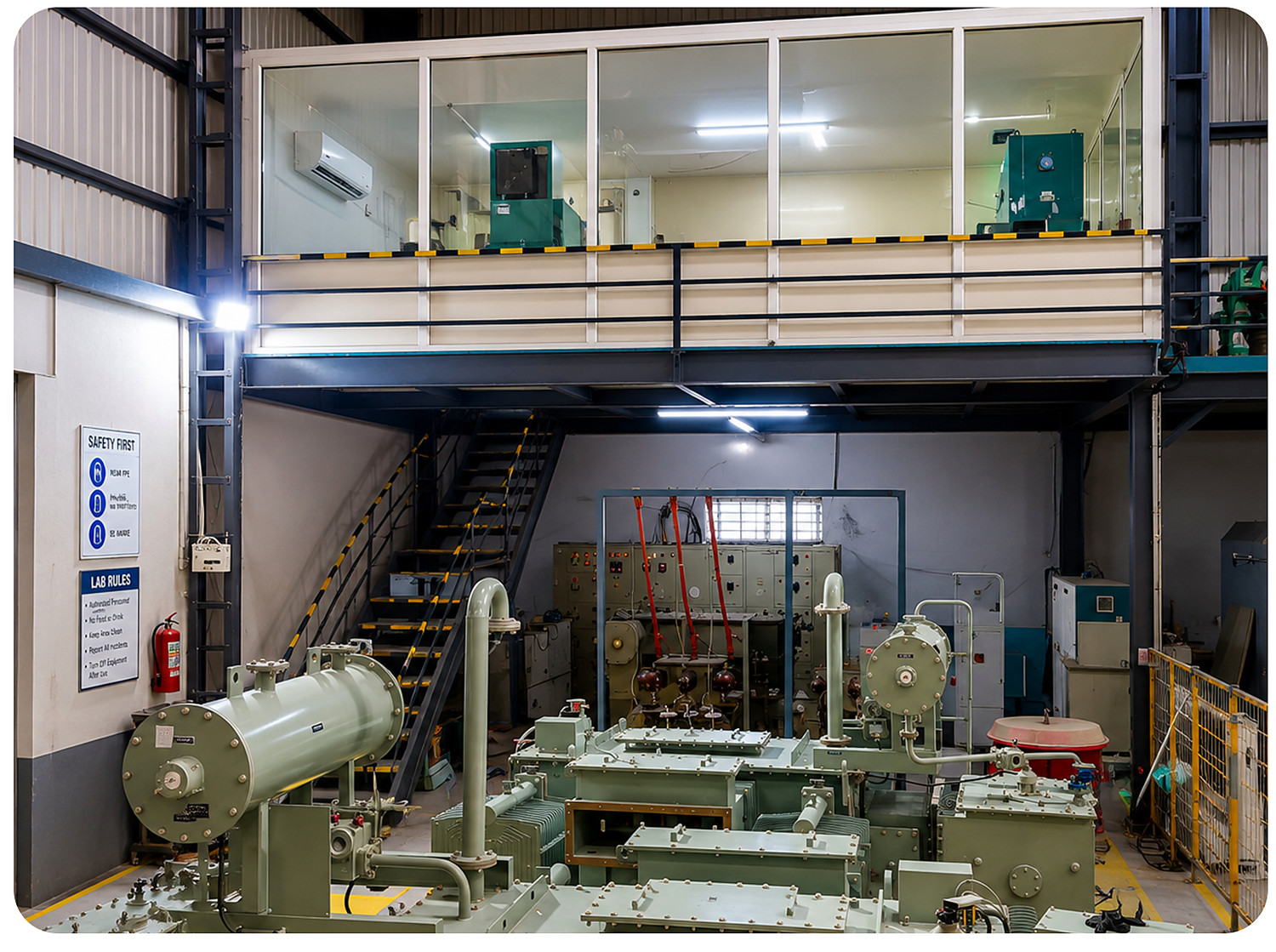
Every transformer and every panel leaving Balanagar is routine tested in our own laboratory, and the certificate is issued against the serial number. Customers, consultants and EPC partners are welcome to witness — most working days, with a little notice.